The Classic Tricorder
By Richard A. Coyle
The Classic Tricorder
By Richard A. Coyle
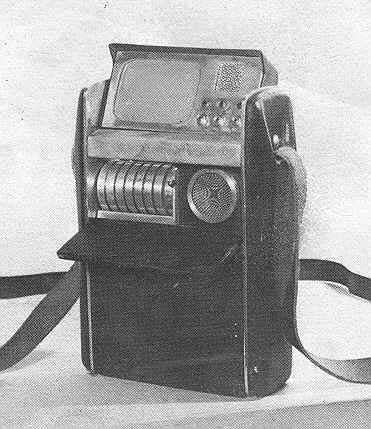 The
Classic Tricorder was never intended to be the "Everything" machine
it ended up being. Its first mission priority (cinematically,
at least) was merely to justify the accompaniment of the enticing Yeoman Rand
with the Trek landing parties. It
is well established in futuristic space lore that there is no real reason you
would take a pretty girl along unless she had a good reason to come; ergo, she
needed a Tricorder. Not surprisingly,
its name really covers what it was originally intended to accomplish from a
technical mission standpoint, which was to record the mission, in (1) picture,
(2) sound, and (3) sensor. Thus, there were three recorder functions for the tricorder.
Later, with the departure of Grace
Lee Whitney, who played Yeoman Rand, and with budget problems that seem to be
endemic to television sci-fi series, the lowly tricorder became the answer to
every question: the problem solver, sensor reader, computer library...you name
it; the tricorder could do it. In the biz, it is know as a plot development
device, -- something to move the
story along easily and quickly.
The
Classic Tricorder was never intended to be the "Everything" machine
it ended up being. Its first mission priority (cinematically,
at least) was merely to justify the accompaniment of the enticing Yeoman Rand
with the Trek landing parties. It
is well established in futuristic space lore that there is no real reason you
would take a pretty girl along unless she had a good reason to come; ergo, she
needed a Tricorder. Not surprisingly,
its name really covers what it was originally intended to accomplish from a
technical mission standpoint, which was to record the mission, in (1) picture,
(2) sound, and (3) sensor. Thus, there were three recorder functions for the tricorder.
Later, with the departure of Grace
Lee Whitney, who played Yeoman Rand, and with budget problems that seem to be
endemic to television sci-fi series, the lowly tricorder became the answer to
every question: the problem solver, sensor reader, computer library...you name
it; the tricorder could do it. In the biz, it is know as a plot development
device, -- something to move the
story along easily and quickly.
 Now
to the details. Unlike the common versions seen at your local Star Trek Conventions,
these were not made of vacuum formed plastic. The only part that was vacuum formed on
each model was the hood. Many had
fiberglass doors and side
Now
to the details. Unlike the common versions seen at your local Star Trek Conventions,
these were not made of vacuum formed plastic. The only part that was vacuum formed on
each model was the hood. Many had
fiberglass doors and side 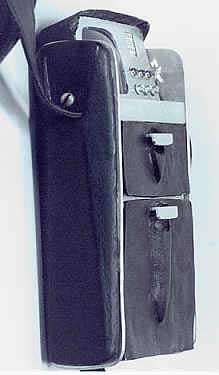 panels, with plastic over a wood back. Many did not even have opening doors, and some had only the
top small door that would open. These were made in a hurry for low dollars,
and when you see a real one you can see that.
They are ratty, bent, poorly fitted things, and many fans would have
passed these up sitting on a table, thinking some kid hacked them together in
his basement, and that surely such heaps could not be a real live TV prop.
panels, with plastic over a wood back. Many did not even have opening doors, and some had only the
top small door that would open. These were made in a hurry for low dollars,
and when you see a real one you can see that.
They are ratty, bent, poorly fitted things, and many fans would have
passed these up sitting on a table, thinking some kid hacked them together in
his basement, and that surely such heaps could not be a real live TV prop.
 Another
detail often incorrectly replicated was the color of the tricorder
indicator lights. In real Trek, the three rhinestones were
only blue -- not yellow, red, and blue as many have done -- just three blue
rhinestones.
Another
detail often incorrectly replicated was the color of the tricorder
indicator lights. In real Trek, the three rhinestones were
only blue -- not yellow, red, and blue as many have done -- just three blue
rhinestones.
 The
hood had an aluminum plate with a cutout shaped like a then current TV screen. They even vacuum formed a small clear
plastic face to match the shape of a picture tube from those days!
The
hood had an aluminum plate with a cutout shaped like a then current TV screen. They even vacuum formed a small clear
plastic face to match the shape of a picture tube from those days!
The Classic Tricorder
By Richard A. Coyle
The Classic Tricorder was never intended to be the "Everything" machine it ended up being. Its first mission priority (cinematically, at least) was merely to justify the accompaniment of the enticing Yeoman Rand with the Trek landing parties. It is well established in futuristic space lore that there is no real reason you would take a pretty girl along unless she had a good reason to come; ergo, she needed a Tricorder. Not surprisingly, its name really covers what it was originally intended to accomplish from a technical mission standpoint, which was to record the mission, in (1) picture, (2) sound, and (3) sensor. Thus, there were three recorder functions for the tricorder. Later, with the departure of Grace Lee Whitney, who played Yeoman Rand, and with budget problems that seem to be endemic to television sci-fi series, the lowly tricorder became the answer to every question: the problem solver, sensor reader, computer library...you name it; the tricorder could do it. In the biz, it is know as a plot development device, -- something to move the story along easily and quickly.
Now to the details. Unlike the common versions
seen at your local Star Trek Conventions, these were not made of vacuum formed plastic. The only part that was vacuum formed on each model
was the hood. Many had fiberglass doors and
side panels, with
plastic over a wood back. Many did not even
have opening doors, and some had only the top small door that would open. These were made in a hurry for low dollars, and
when you see a real one you can see that. They
are ratty, bent, poorly fitted things, and many fans would have passed these up sitting on
a table, thinking some kid hacked them together in his basement, and that surely such
heaps could not be a real live TV prop.
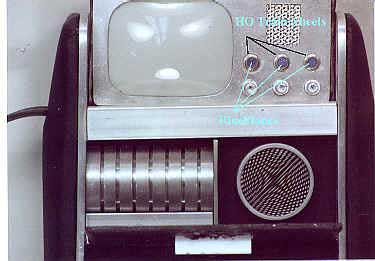
Another detail often
incorrectly replicated was the color of the tricorder indicator lights. In real Trek, the three rhinestones were only blue
-- not yellow, red, and blue as many have done -- just three blue rhinestones.
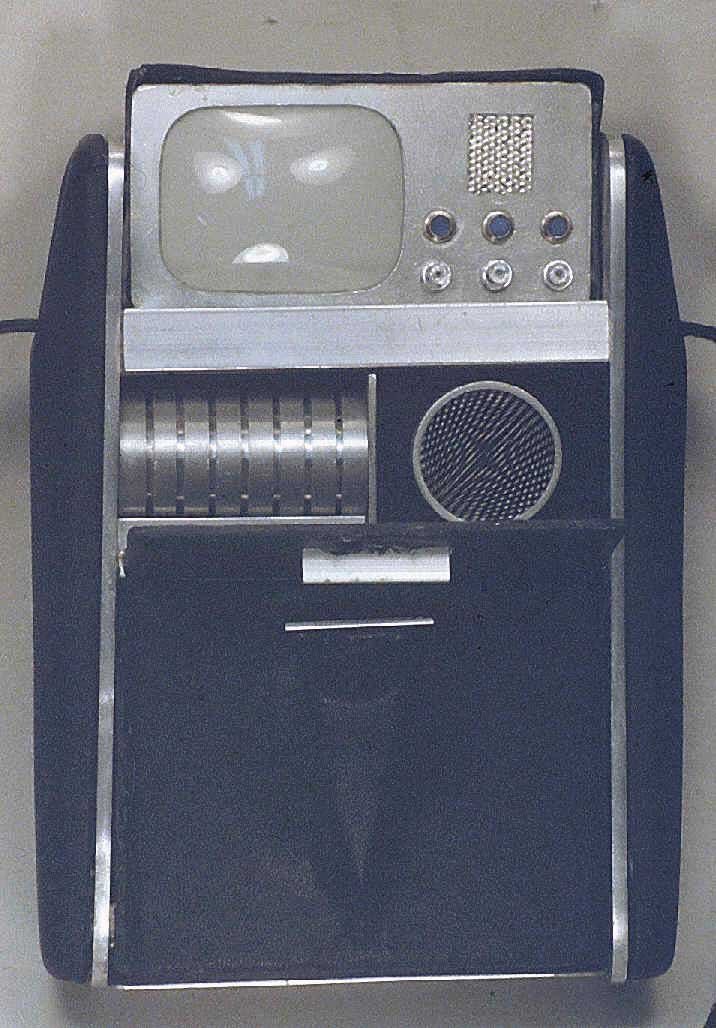
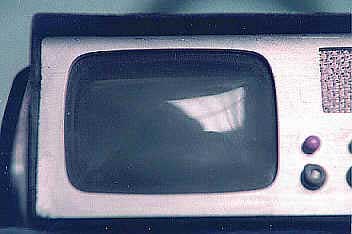
The hood had an aluminum plate with a cutout shaped like a then current TV screen. They even vacuum formed a small clear plastic face to match the shape of a picture tube from those days!
To second Page
Classic Tricorders Page Two
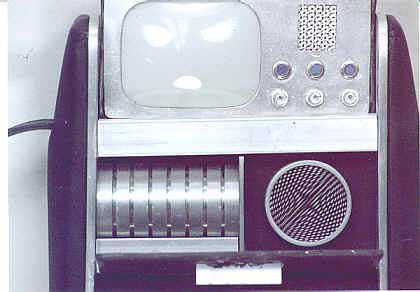 Next to
the TV screen were three knobs with the three blue rhinestones above them, and above that
was a small square speaker/microphone grill. Below the hood was the middle small door. Behind it was the scanner disk and display next to
the data disks. On the original design,
these were to be removable like small CDs. There
was one special geologist model that had a white square light in place of the scanner, and
this model could be set on alarm scan.
Next to
the TV screen were three knobs with the three blue rhinestones above them, and above that
was a small square speaker/microphone grill. Below the hood was the middle small door. Behind it was the scanner disk and display next to
the data disks. On the original design,
these were to be removable like small CDs. There
was one special geologist model that had a white square light in place of the scanner, and
this model could be set on alarm scan. 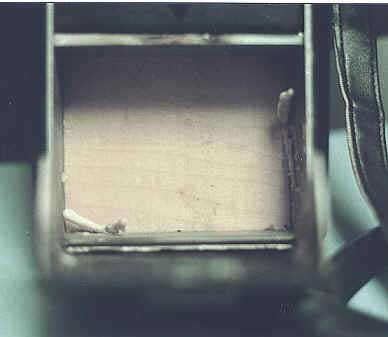
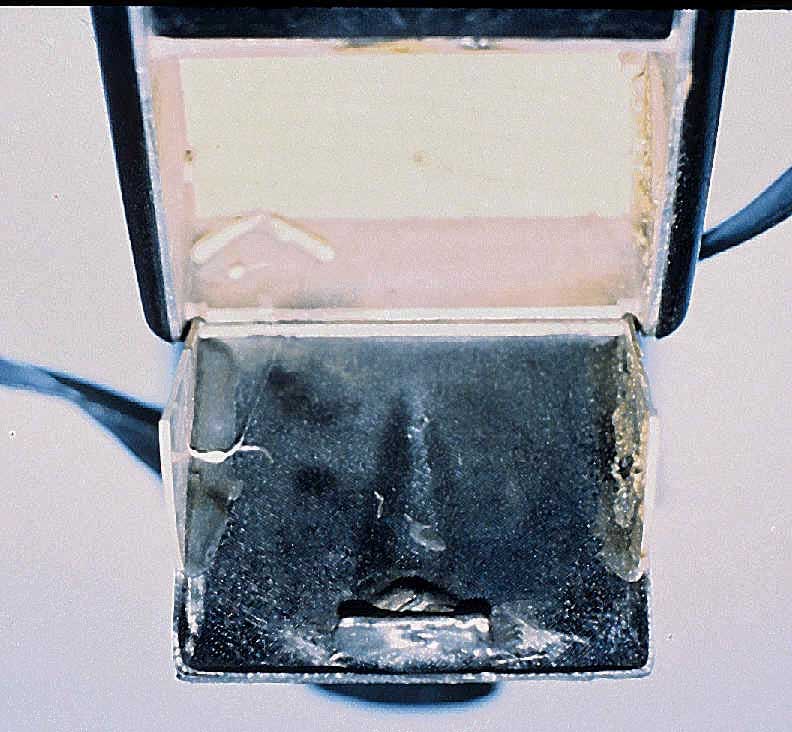
The bottom or big door was never really opened to our view, although Doctor McCoy's did contain his famous little Medical Scanner. This never-seen, never-used bottom door did serve a purpose, though. For example, Leonard Nimoy would use his tricorder's bottom door to hide his Tootsie Roll Pop. Some even seem to still have a sticky one still awaiting his return.
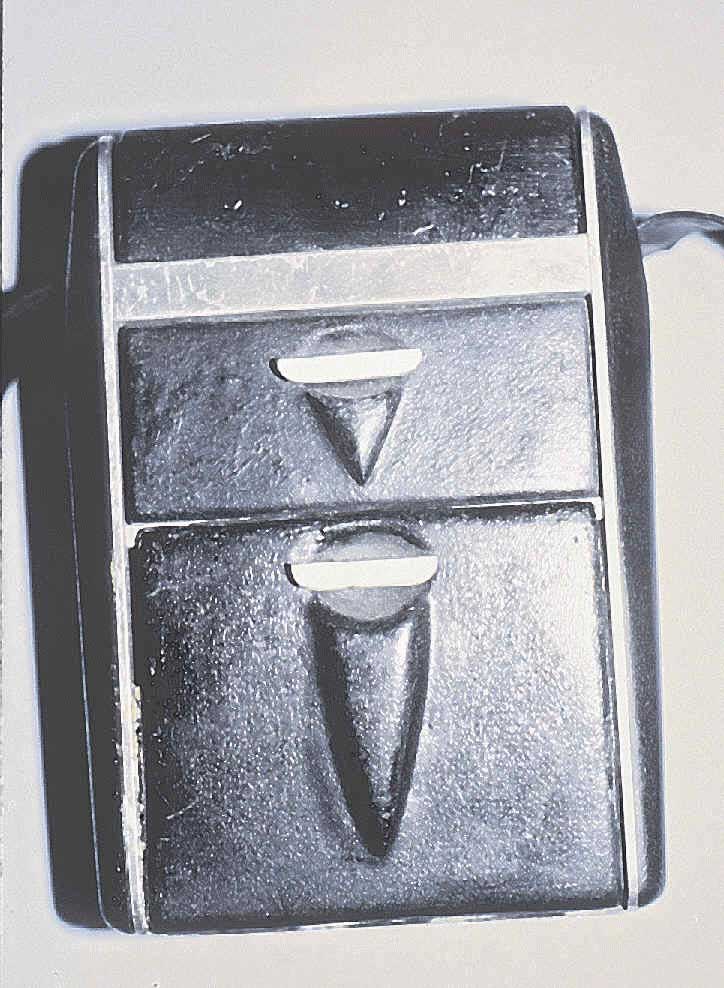 One model I have
seen (which I am not completely certain was on the original show, for most details are
right on, but others off) was a leatherette covers model.
It had a straight cut hood, unlike the notched hood common to the standard models,
and the fit and trim were the best I have seen. In
fact, if it were not for the odd details, I would have said we are looking at a front line
"Hero" Model. The oddest detail was the use of three round headed sewing pins in
place of the three rhinestones and train wheels for washer bases. In addition, these three pins are red, yellow,
and dark blue. The speaker grill on this
interesting piece is not the normal metal grill, but a piece of cloth.
One model I have
seen (which I am not completely certain was on the original show, for most details are
right on, but others off) was a leatherette covers model.
It had a straight cut hood, unlike the notched hood common to the standard models,
and the fit and trim were the best I have seen. In
fact, if it were not for the odd details, I would have said we are looking at a front line
"Hero" Model. The oddest detail was the use of three round headed sewing pins in
place of the three rhinestones and train wheels for washer bases. In addition, these three pins are red, yellow,
and dark blue. The speaker grill on this
interesting piece is not the normal metal grill, but a piece of cloth. 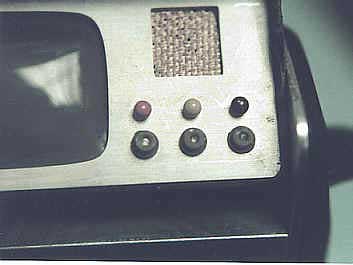
At Conventions I often called it the "Seamstress Model"
Star Trek created the idea of the hand held scientific scanner/sensor instrument that could analyze just about anything and give information, this concept has become a staple of science fiction and in the real world they are working on them, there was a real tricorder made for a short while that could do some real world sensing, see the degree of light, read temperature, read electromagnetic impulses and other functions.
So the day of one that could really do what the Tricorder did in Trek may not be too far in our future.
And as the links will not work correctly here are more pictures. Sorry about the loading time.
Classic Tricorders
Next
to the TV screen were three knobs with the three blue rhinestones above them,
and above that was a small square speaker/microphone grill. Below the hood was the middle small door. Behind it was the scanner disk and display
next to the data disks. On the original design, these were to be removable like small
CDs. There was one special geologist
model that had a white square light in place of the scanner, and this model
could be set on alarm scan.
The
bottom or big door was never really opened to our view, although
Doctor McCoy's did contain his famous little Medical
Scanner. This never-seen, never-used bottom door
did serve a purpose, though. For example, Leonard Nimoy would use his tricorder's bottom
door to hide his Tootsie Roll Pop. Some even seem to still have a sticky
one still awaiting his return.
One
model I have seen (which I am not completely certain was on the original show,
for most details are right on, but others off) was a leatherette covers model.
It had a straight cut hood, unlike the notched hood common to the standard
models, and the fit and trim were the best I have seen.
In fact, if it were not for the odd details, I would have said we are
looking at a front line "Hero" Model. The oddest detail was the use
of three round headed sewing pins in place of the three rhinestones and train
wheels for washer bases. In addition, these three pins are red, yellow, and dark blue.
The speaker grill on this interesting piece is not the normal metal grill,
but a piece of cloth.
At Conventions I often called it the "Seamstress Model"
Star Trek created the idea of the hand held scientific scanner/sensor instrument that could analyze just about anything and give information, this concept has become a staple of science fiction and in the real world they are working on them, there was a real tricorder made for a short while that could do some real world sensing, see the degree of light, read temperature, read electromagnetic impulses and other functions.
So the day of one that could really do what the Tricorder did in Trek may not be too far in our future.
And here are more pictures. Sorry about the loading time.