This is your Life, A Personal History Richard A. Coyle
This is your Life, Richard A. Coyle! 1977 to 1996
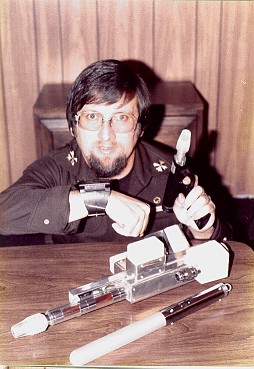
I grew up reading Robert Heinlein, Ray Bradbury and Isaac Asimov books and watching science fiction. I remember "Flash Gordon" (made in then West Germany), "Rocky Jones, Space Ranger," "Forbidden Planet," George Pal's "War of the Worlds," , "Twilight Zone," "My Living Doll," "My Favorite Martian," "Outer Limits," "Man into Space," "Lost in Space," then came "Star Trek," arguably the best of all TV sci-fi shows.
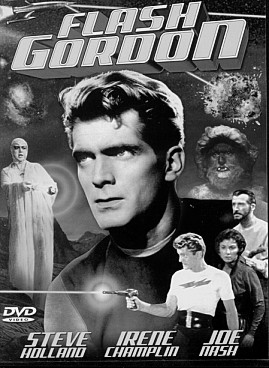
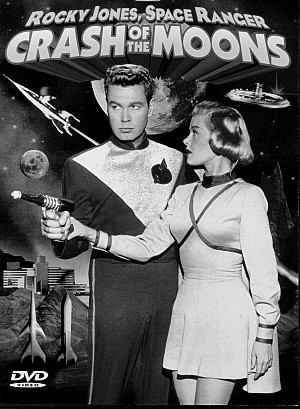
I discovered science fiction fandom when I attended the first screening on the first day of Star Wars. There was a poster for something called a Star Trek convention and the catcher was that Robert Heinlein was a guest. After a lifetime (I was an "old" 29 at the time) of not being one of the in-crowd, I found "heaven", a place where I was among my own species: fans.
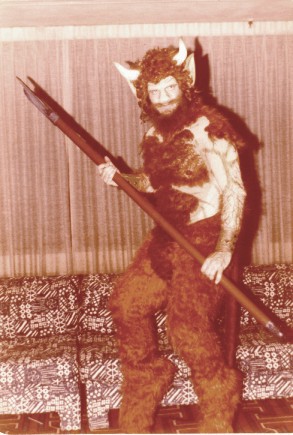
And lo and behold, there was a second convention that summer along with people dressing up as their favorite sci-fi characters in costume. By drawing from my own childhood favorites and aiming for an easy costume to make, I went to a second convention dressed as that West German TV show hero, Flash Gordon. It was a T-shirt with a lightening bolt, black pants, black boots, and a wide belt. All I needed was a raygun.
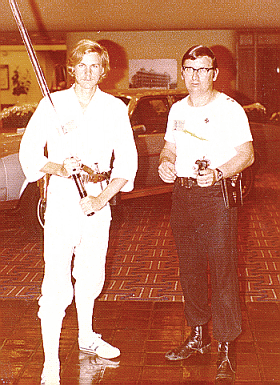
I had an old toy pistol, a Johnny Magumba automatic and a CB radio microphone. Briefly: I gutted the microphone for the shell, removed the automatic slide to the toy gun, glued the CB microphone in its place, mounted an aluminum tuning knob from electronic equipment on the barrel for a muzzle tip and gutted a Mego Star Trek Communicator to use its sound effects for the raygun. I used the CB microphone clip to make a Holster ala Star Trek and went to the con.
My first Hall Costume. (I'm the one on the right...)
I was a hit. Everyone wanted to see and play with the gun (this was 1977). I even entered the masquerade and at first was laughed at, until I drew the raygun and blasted the audience, that got a big hand from those who survived.
The next Phoenix convention was coming the next year, something called Worldcon. As I discovered that conventions had been going on for years, I thought this could be a way to switch from a declining TV repair business to something fun that I loved. I started planning on a line of new, original rayguns to sell at these conventions. With a couple of friends, we whacked together a few machine gun type raygun models with sound and light effects and went off to conventions.
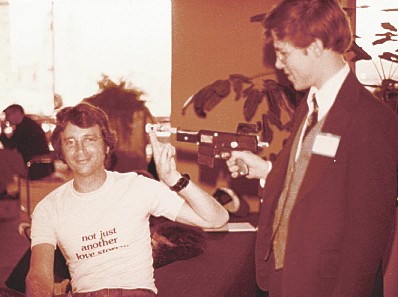
(This is a picture of one of those blasters at World Con.)
We were hits - again. It took over three days for me to work my way through the dealers' room. I could not move without drawing a crowd. Every time I was asked to shoot the blaster, it drew dozens to hundreds of onlookers.
I started working every convention I could get to, quickly running into the problem of not being able to make enough rayguns as well as work every convention. With a wife and two children I needed steadier income. I started buying models from other prop makers to sell and tried to wholesale my models to other dealers, in the hope of becoming busy enough to be able to hire a crew to make the models and let me work the cons.
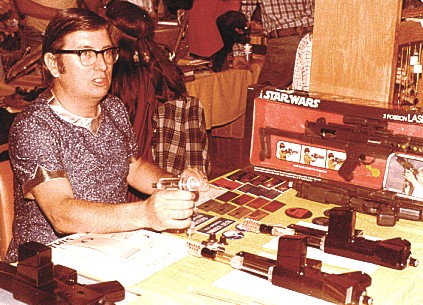
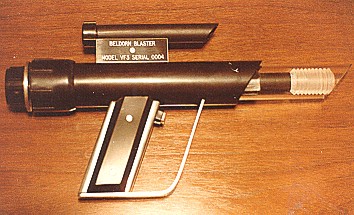
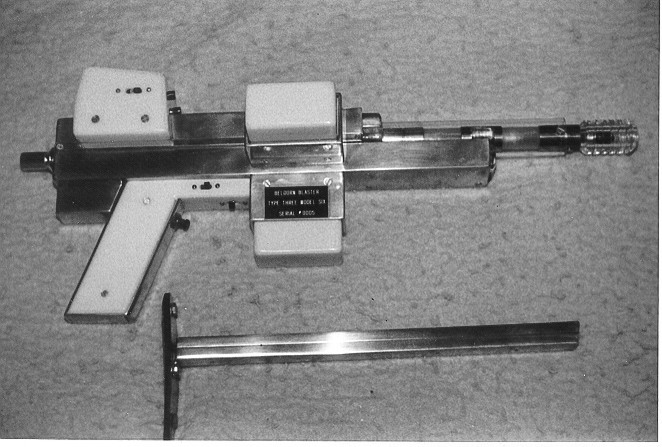
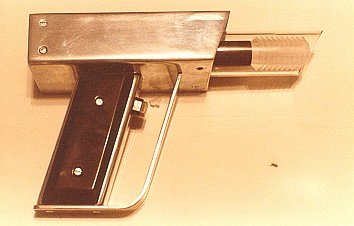
I heard that the editor of Starlog was going to be a guest at a StarCon convention in Denver, so I set my sights on meeting him and seeing if I could work a deal to mass market my models. I made a deal with Kerry OâQuinn of Starlog magazine to make rayguns and for them to advertise and sell them. This deal fell through when they failed to run the first ad before Christmas, a crucial selling time. With no income coming in at that time and other problems, my wife of 13 years asked for a divorce
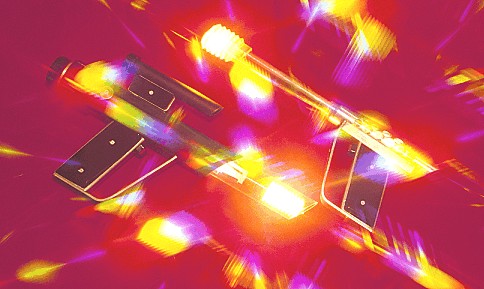
.
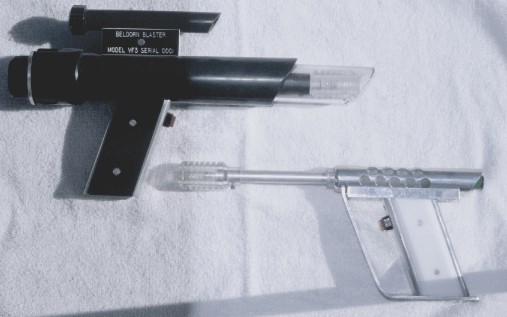
I moved to Los Angeles, looking for a place to live and set up shop. It was during this transition time when Starlog started running the ads and getting orders I could not promptly fill. (I did indeed fill them just not as fast as the customers, StarLog and I would have liked...) The deal fell through.
I went on making rayguns and working conventions and met Jackie, now my wife.
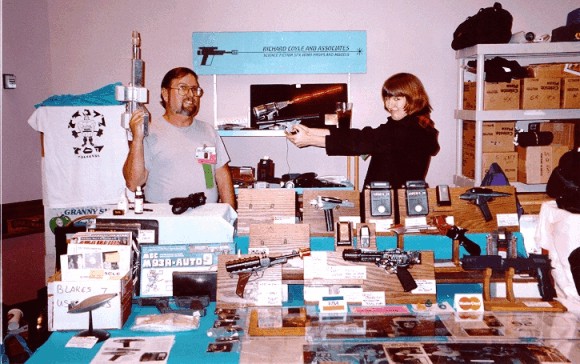
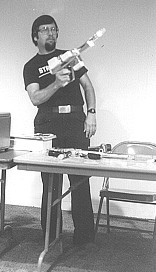
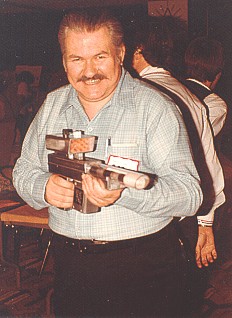
Due to a campaign to stop mock weapon wars and games with peace bonding and rules to prevent those games, sales for original rayguns were fast disappearing. Instead, it seemed that the sought after thing was now reproductions of movie and TV props.
Having given up living in Los Angeles with its escalating costs, I returned to Mesa, Arizona. From there we did Worldcon in Denver, aka the "Mile Away Con," due to the dealers' room being about a mile away from almost all of the rest of the cons' main rooms.
This was around the time I received a call from Modern Props, a prop and set piece rental shop for TV shows and film. Their specialty was the futuristic look in furniture and props including tools and instruments and, of course, rayguns. They wanted to buy many of my original guns and inquired if I could make some changes to suit their needs, and I was happy to comply. I sold them three to four styles, all without sound, and a newer, more selectable light driver system. They placed a few orders:
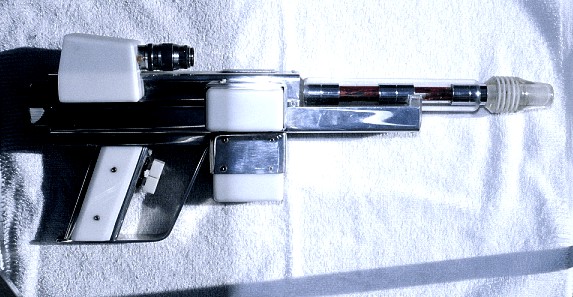
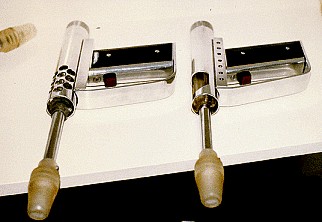
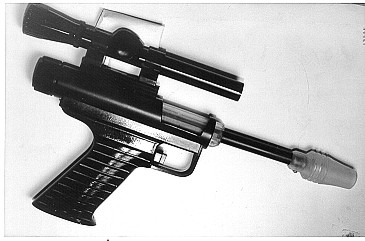
They then asked if I could create a wrist communicator for the small film, "Angel of Heat," a soft semi-porn film staring Marilyn Chambers as a Secret Agent of a Special Unit of super spies. It was never worn on the wrist but carried on their belts.
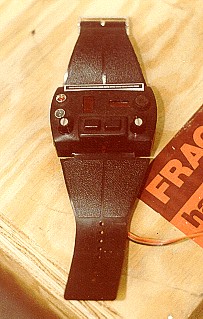
Please note, due to the number of pictures and details to talk about, what I would like to do is to point you to other articles on each film and prop job, as there is so much to cover on almost each film, it would make this article about 10 times longer.
Then came the big one, Star Trek 2. (Please Look to Star Trek 2.) (coming soon)
Modern Props called to say they were working on "Star Trek 2" and could really use my help. Could I relocate back to Los Angeles? I said I will need a place to work and to live, and they said they would set both up for us, just get here ASAP!
They found a place that was a sub-rental of a woodworkers' shop in the same building they were renting which would allow me to get right to work. They said that they would help us get a place to live once we got there.
This didn't happen. We loaded everything up, left Mesa and drove back to Los Angeles, but while they had the shop, they could not get us a place to stay, as they were not paying me enough to get a place. (once we finished Star Trek 2 there really was not much work)
They said I needed to have Jackie find a job and find a place to live. So we parked the van in front of the shop and lived out of it for about four months, running electrical cords into the building.
I didn't mind too much. I was so excited to be working on "Star Trek 2."
I subcontracted to Modern Props on that film and had a great time, but afterward found work too spotty with them. I was still living out of my van...in front of the same work shop I had sub-rented to build props and started hunting for full time employment and found it in another prop rental shop, "The Hand Prop Room." With a steady paycheck I was at last able to rent a place to live.
And the props left behind at Modern props, well...Like Mummies and Zombies my stuff kept being resurrected in films and TV Shows, such as:
"Airwolf" (Flight helmet).
"Slapstick of Another Kind" Jerry Lewis (Rayguns)
"Automan" (Rayguns.)
"Condor" (Rayguns)
"Murder in Space" (Rayguns)
"Murder by Moonlight" (yes, that is my gun)
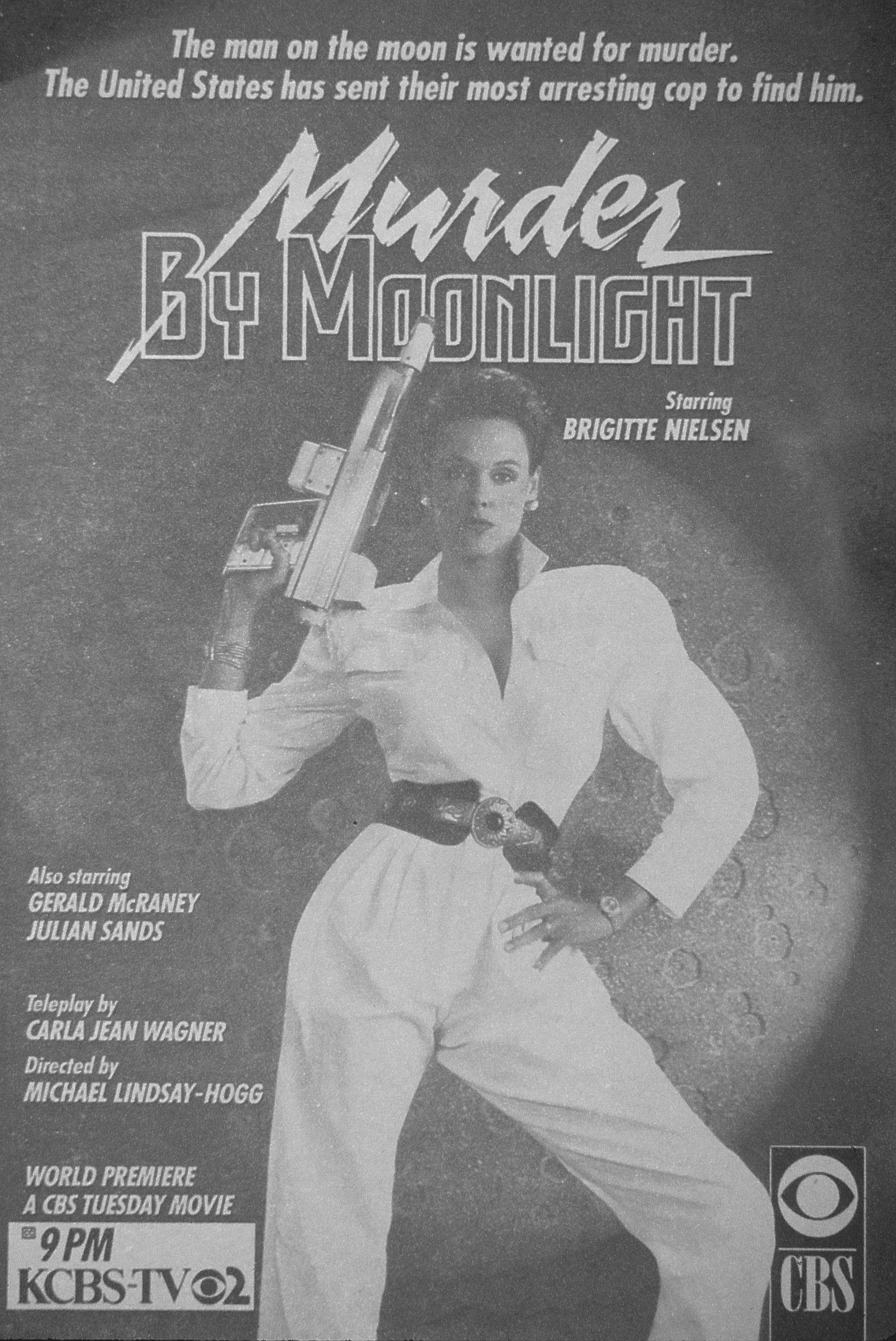
"Powers of Matthew Star" (Rayguns and props)
"Re-Animator" (A medical Probe)
"The Last Starfighter" (Scanner and consoles)
"Trancers" (Raygun)
The job interview at "The Hand Prop Room" was fun. I took a box of my props with me, my résumé as it were. While I'm being interviewed by Mr. John Ramsey in walks the owner, Mr. Allen Levine. He looks at the props all over the tables and asks, "Where did these all come from?" John said, " This guy made them. I'm interviewing him for a job." Allen replied, "Right, I want him in here by Monday!" And I was hired.
Continued from
They wanted to add futuristic science fiction props to their all ready massive storeroom of just about everything historical. Unfortunately, they were unwilling to let me create stuff for them, rather they tried to get the production company to design and pay for prop fabrication and then rent these props from The Hand Prop Room. The plan didnât work out that way.
It was funny and sad. At one point I found myself in competition with myself, I was asked into Mr. John Ramsey's office and was shown a pair of pictures of some rayguns a propmaster was looking at renting from another Prop shop, and I saw a bunch of my own models that were over at Modern Props...I lost the job to myself, as it were.
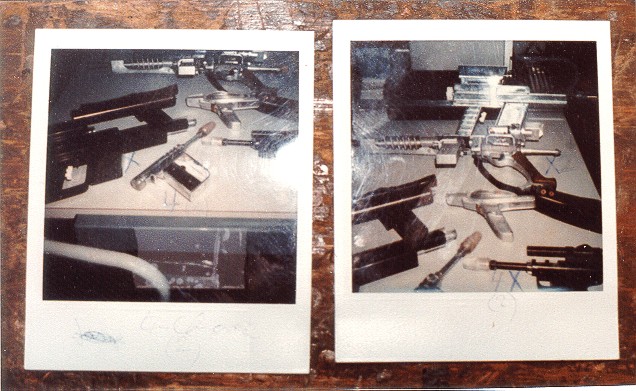
The blue Xs are the ones he liked; three of the four were mine.
Sadly this still did not convince them to let me pre-make a bunch of props, I even brought my own boxes of parts, all kinds of things that I would build props with so that I might have a chance to get work, which I would pitch to the prop masters that came in. All failed.
The prop masters were not designing props, they wanted to rent them and thus wanted to see some to pick out, to rent what they liked and wanted.
So most of the time I stuck building spy cases out of Halliburton cases. Man, did I get sick of Halliburton cases.
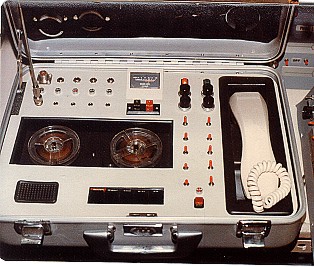
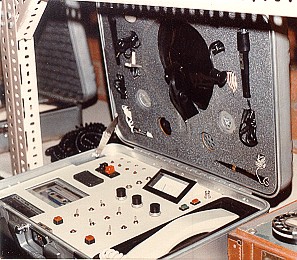
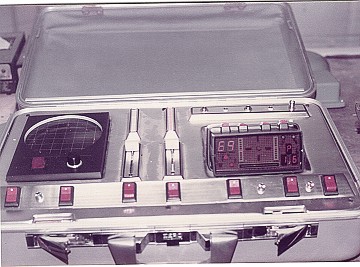
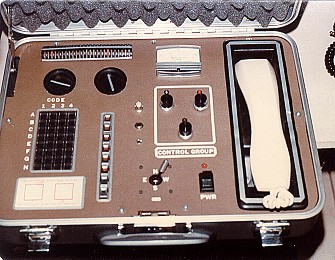
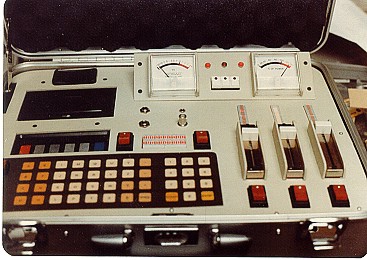
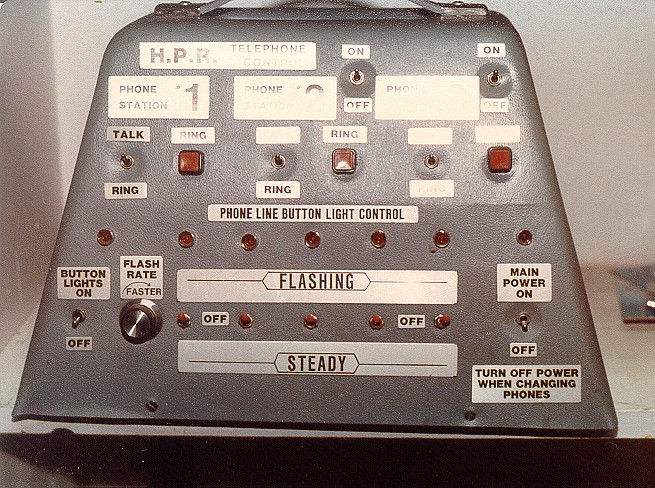
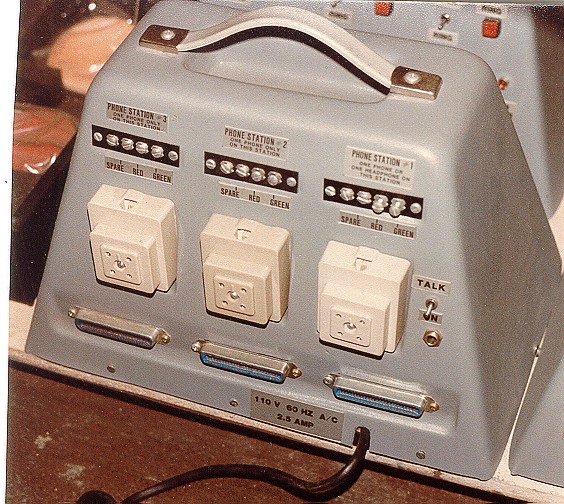
Oh yes I almost forgot one other project I was rather proud of building; I made a great bunch of phone ringers.
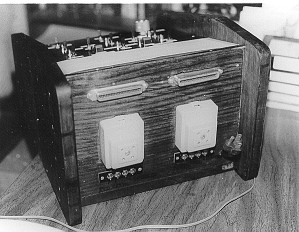
These are A/C powered phone control boxes. Mine was able to handle up to three phones, three 5 line phones, to ring them, to flash the lights in the buttons and to allow the flashing rate to be changed, and these let the phones be "live" in that the actors could actually talk to each another, and the third line could be used for the director to direct or be hooked into the sound recording to record the dialog. And each box would run a 5 line phone, a 4 prong plug, a micro plug or a hard wired phone to cover all types of phone.
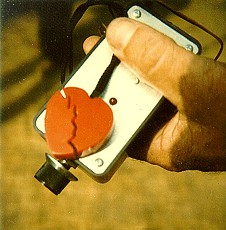
In fact I only did a few noteworthy projects while at "The Hand Prop Room", first was lights for the heart in the Richard Gere movie, "Breathless"
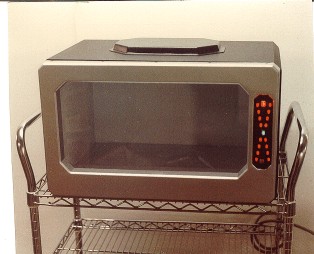
Then there was a Japanese TV commercial with a food transporter. A footnote; in a shop like "The Hand Prop Room," a lot of the work was by team; many of us would be working on the same project, one would be doing the vacuum formed tool and another did the vacuum forming and another would trim and paint it and I would be asked to do the electronics, the winky blinkies.
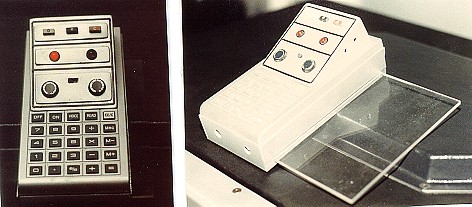
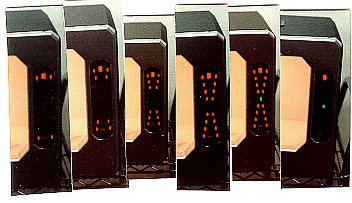
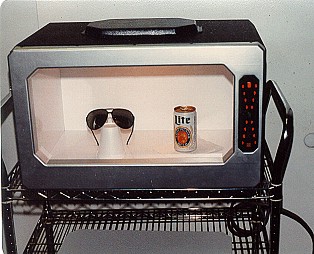
Next was a film called "Get Crazy" which I will send you to an article on the props and work in that at "Get Crazy" (Coming soon)
And of course "The Greatest American Hero" which I cover in "How I helped "The Greatest American Hero" here.
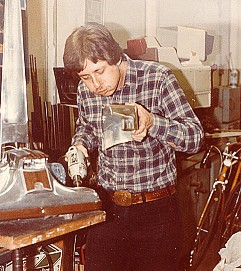
A little side note, remember "Mr. MOM." "Hand Prop Room" did a few props for that like the Killer Vacuum Cleaner called "The Beast". I had nothing to do with it but here is a guy called Harvey working on the "Beast," putting a cover over the drive motor that was added to make it self-powered and to run around on its own by remote control:
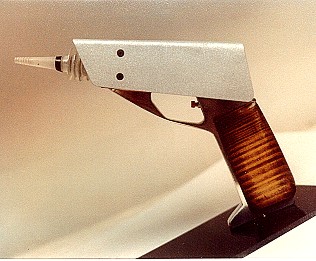
I did at last get them to let me build one little gun out of my junk boxes, and this is what came of it:
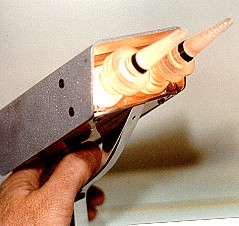
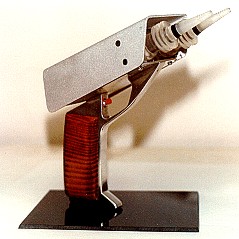
In Hollywood they say "We had creative differences" Once again, I moved on after 9 months.
I went independent as Prop Maker, and wisely I called myself:
"Richard A. Coyle and Associates SPX Prop Makers'
By using my own name I accidentally helped insure my own fame. Common practice was to use a fictional name like Apogee and Proper Effects, all very nice but ANYONE could own them and anyone could work there. By using my own name said I did it.
By the way have you noted the engine that drove my career? It was the electronics, the winky blinkies. They would come to me for the lights, and I would sell them so that I could also build the cases to hold them...
I did a freelance job on "Ice Pirates" (coming soon) and subcontracted to Ellis Mercantile, still another prop rental shop. I worked with Chris Gilman.
Meanwhile, to supplement things, I was beginning to make media prop reproductions. I found many reasons to do these; much as artists are taught to copy the old masters to learn their style, I needed to solve the same problems that the prop makers had to solve when they made these props. Doing this learning allowed me to work full time at my craft, to expand my abilities, and pay the bills between film work. I would not be the prop maker I am today if I had not taken that path. Building for retail customers was much more demanding than film work. In film work, speed was more important than doing a pretty job.
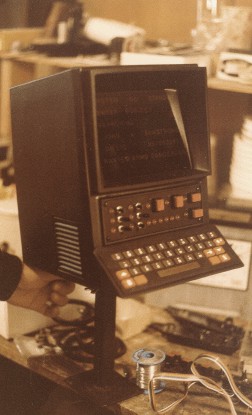
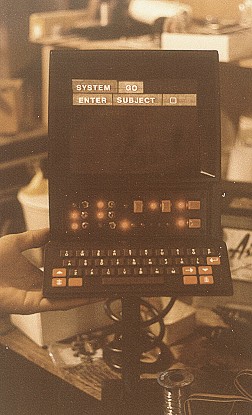
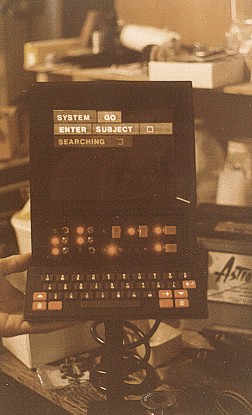
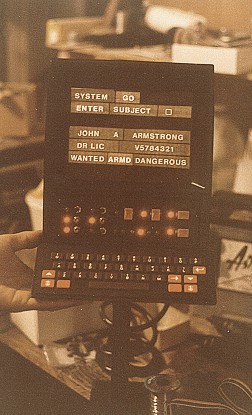
After "Ice Pirates" I got one last call from the old "Hand Prop Room" to build a Police car computer for them one that would allow controlled reactions but be much cheaper than a real computer. So I rigged up a mock computer with a few real controls. An actor could pound all day on the key board, and nothing would happen but flip the right switch, and it would spring into action.
Scene: Policeman flips the computer on, it would light up and run a couple of lighted panels on the TV screen, like: "System go: Enter Subject" and the curser would sit there and blink, (like a real computer did back then...) he would then make like he is typing a bunch of information in...and when done flip the second switch.... a new panel would light and blink, like :"Searching" then after a minute it would light the remaining panels like it was printing out the answers. Here it is:
I remained freelance and found that Lincoln Enterprises was still in business. Lincoln Enterprises was the sovereign company Gene Roddenberry and his wife Majel Barrett formed during the run of the original "Star Trek" to sell fan-related items of ST, way back in 1968.
I pitched to Mrs. Majel Roddenberry to sell fans Phasers and Communicators. Eventually we agreed on terms and for the next few years I made props for Lincoln Enterprises. I had again rejoined Star Trek.
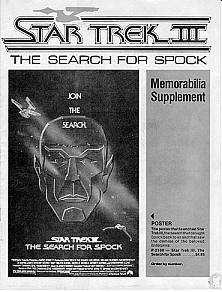
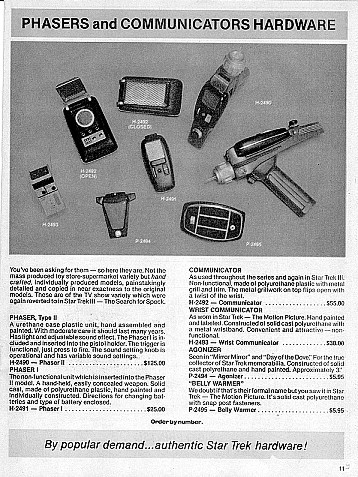
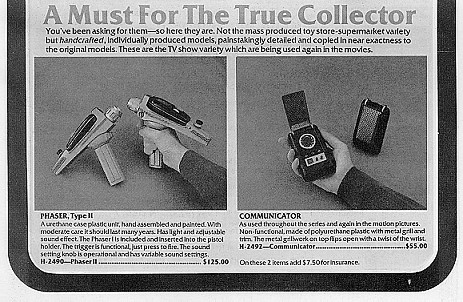
But Mrs. Roddenberry found carrying the props problematic. She liked low maintenance products, photos, copies of scripts, non-working Tribbles (The furry creatures from the famous Star Trek episode "The Trouble with Tribbles), belt buckles, other paper goods. But Props were hardly low maintenance. She found herself responding to the flurry of questions about how the Phaser reproduction worked, what kind of battery it used, and then there was the greater likelihood for damage in shipment, damage from customer handling and the handling of her own people. We parted company.
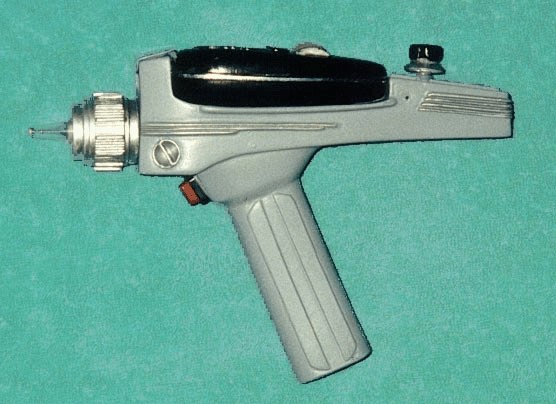
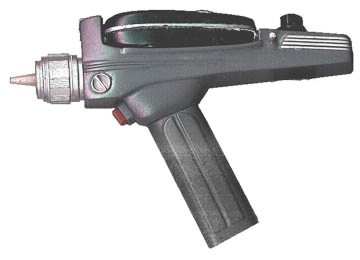
These are two of the infamous red trigger Phasers.
I made a call to Paramount licensing and asked about getting a license and received the following reply, for which I wish I had a tape and a dozen witnesses: "We donât sell a license for such things, you donât need a license to make them. Just go ahead and do them." Which, of course, I did as I was told! (For 2 decades I never retold this story, figuring I had been BS'ed by some guy at the studio, but last year I ran into another person who claimed he was told the same thing! REALLY wish I had that tape and a dozen witnesses)
Meanwhile, I had enough contact doing business with the conventions and the fans to know that making these props for the fans was a seemingly dead end. There was just not enough money in the hands of the average convention going fan. (At least that was what they said when they could not/would not buy my models, and sales at cons seemed to prove it.)
So I sold prop reproductions to the fans while hunting steady work in the film industry. I used to joke about convention sales as being my personal prop making show biz version of actors parking cars and waiting on tables while looking for that big break.
One project was to build another phone box, so I did this:
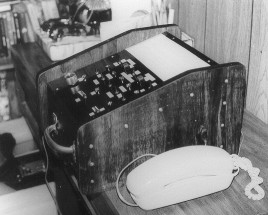
I then got a call from Mr. William Malone whom I had contacted earlier about his "Forbidden Planet" collection and he had helped me with a model of the C57D, the space ship from the film, and with the DR raygun pistol from it as well.
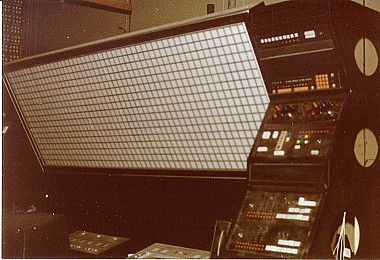
He was doing a small film then called "Titan Find," later to be renamed "Creature" He was looking for someone to recreate the computer panel used in the 1955 MGM film, "The Invisible Boy." We took on the job by renting a friend's garage. (And made all 882 2 inch square lighted panels too!)
Funny as this was a fairly low budget film I was offered a credit as part of the payment, which I had to take, and so my ONLY film credit was for the building of this computer panel, and it was NOT for props, after all, it was a part of the set so I got a film credit for set building...darn!
We also did a few props for a film called "Radioactive Dreams" (link) and spent one night working as extras to see our props in the film and to have fun being in a film.
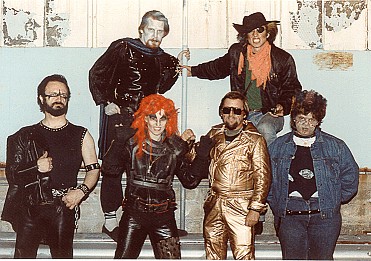
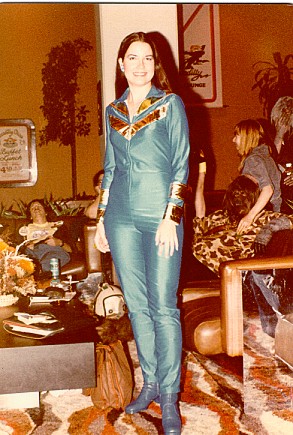
And of all things I am wearing the gold lamé costume that Gil Gerard wore in Buck Rogers in the desert planet show, and it was tight! Jackie is the one in the red wig.
Looking for a good product led me to a friend, Mr. Scott Brodeen who wanted to make a run of models of the Disney-designed version of the Nautilus submarine from the film "20,000 Leagues under the Sea".
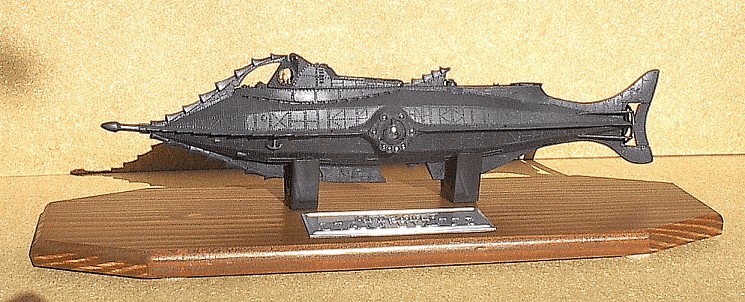
I pitched this idea to the Disney Company and we were soon making these models, for the Disneyana store on Main Street in Disneyland Park. Although glamorous work, which helped make Scott and I famous among Nautilus fans, the work from Disney was not steady enough to live on, but with one to two film jobs a year, one to three orders from the Disney Company, and all the wholesale and retail sales I could do, I was able to make a living as a prop and model maker and had the fringe benefit of walking the sets and seeing lots of movieland.
That and the hope that I could bootstrap the whole operation into a real full-sized operation with a big shop and lots of film and TV work to keep a crew busy.
But these were very hard times, we got built up and seemed to be making it. I was working with a small crew of three and four guys, when we did the 1984 Worldcon in LA. Well that was just too much, when we go home I found that we were more or less broke, there was little money left over, and this caused a major breakup. I had to move out of Culver City to Tujunga and then Jackie and I fought, and I was just about fed up with the whole thing and called a friend back in Phoenix and got a job offer running his automotive junk yard, so I moved back to Phoenix once again, alone, Jackie and I separated.
But once I was rested I ended up still making props, as I was really not in love with the wrecking yard...so I got some urging from a few friends and especially Mr. Scott Brodeen, who promised use of his garage, and that I could park my little travel trailer I had bought to live in the junk yard in his yard for a couple of weeks if I came back and got a film job, and as there was another Star Trek job upcoming, that with with his support I should go for it.
So I returned yet again to California with a nearly grown 16 year old son Robert, to Scott's then home in Riverside, where we (Robert and I) designed a new style Phaser for the upcoming new Star Trek film:
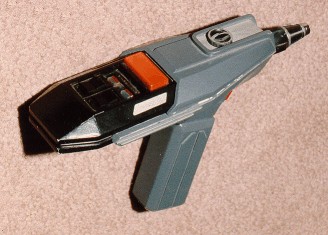
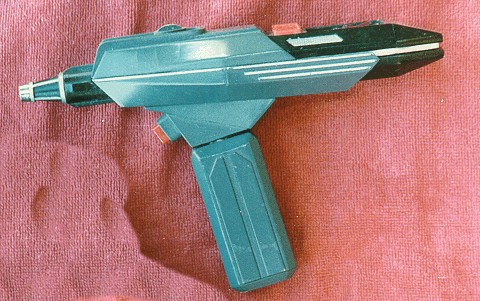
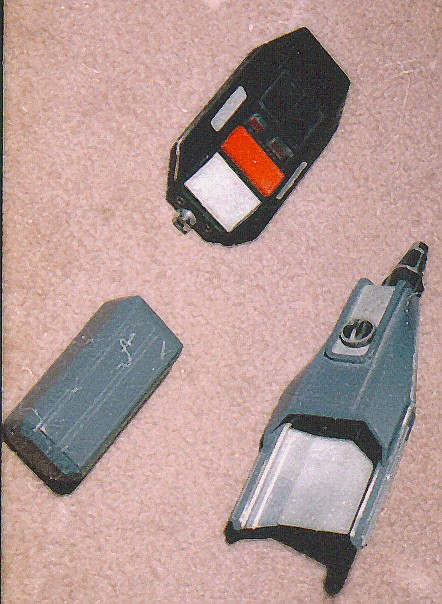
Once it was made I called Paramount, reaching the prop master on the film, Mr. Ron Greenwood, and then I pitched it to Mr. Ron Greenwood for the new "Star Trek 4." Timing is everything, as the saying goes, for he had just learned that he needed a special prop in four days for the shoot that was going to take place in the San Diego Navy shipyards next week. "Could I do a special rush order of two of these props by Monday?" And this question was posed to me on Thursday. I say yes.
The following Monday morning I delivered two "Power Leaches" that were shipped to the paint shop on the lot then rushed down to the film Production Company the next day. Scott, Robert and I work almost with out sleep that weekend) The prop worked fine when Lt. Uhura and Mr. Chekov stole protons from the nuclear reactor within the USS Enterprise in the film. (please go to Star Trek four)
Mr. Greenwood was so pleased with our timely delivery; he gave us lots of other jobs for this film. I was able to make deliveries to the studio lot and often on the sets and on locations such as the hospital and the park where they filmed the locations with the helicopter. (I was of course in Trekyâ¦eer Trekker HEAVEN)
With the income and the help of Scott Brodeen I was back on my feet, and my return to LA and Hollywood also helped me to return to Jackie, we found that we really did not want to live without each another so we got together again and rented a small house (behind a house, another LA converted garage deals) in Hawthorne and have been together ever since. (clue sappy music: And they lived happily ever after...)
But even with this success on my résumé, I still could only find work in show biz for a few months out of the year. So I was back making props for the fans and working the science fiction and "Star Trek" conventions again.
And when the Trek people announced the start up of a new "Star Trek" TV series, I was fast to attempt to get work on it.
I designed a new Tricorder, combining the features of the classic and the movie 3 types, and added special features such as a backlight screen that would allow fast changing of a transparency for live, in the camera, shots of the readouts, motor powered pop-up head, and adjustable blinking LEDs.
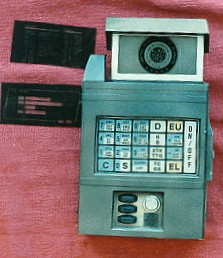
I called the Star Trek office again who sent me to the art department and I was first interviewed by Mr. Herman Zimmerman who thought I and my version of a Tricorder were good enough to set up a second interview with Mr. Robert Justman, the legendary Robert Justman who had been Gene Roddenberryâs right hand man on the Classic Trek series in the â60âs.
Seems they all ready had designs for all the new props, the art department was staffed by: Herman Zimmerman, Andy Probert, Rick Sternbach, Mike Okuda and many others, who had already designed a whole new look for the upcoming show.
And here I was, an upstart with a Tricorder design, and a working model in my hand, but I had only worked the films and there they needed input and I often was a part of the design teamwork, so what did I know? But I made a fair impression any way:
I was given a shot at the prop work for the new show and was then given the designer packet and order list for the new show and asked to submit a bid on any and all I thought I wanted to do. In the next couple of weeks, Mr. Mike Okuda helped me whenever I had questions as did Mr. Andy Probert (who also happened to be a fan of Disneyâs "20,000 Leagues Under the Sea") and Mr. Rick Sternbach. But eventually this coveted job on Trek went to a friend of Mr. Probertâs who had worked with him on the TV show "Air Wolf". This friend was also a member of the Prop Union, of which I was not.
We did do a couple of spec models:
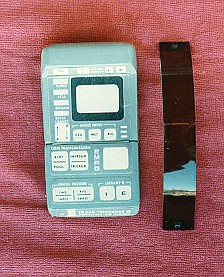
Again finding myself on a road to a dead end, I thought the only way to make it was to go for a license for the props. Again. I started looking for a way into this particular Holy Grail. I contacted Mr. Andy Probert again who was glad to try to get the licensing people to talk with me; he pushed hard for that to happen.
I submitted my Classic Phaser to the Merchandising department at Paramount, and waited and waited...
And when Andy left after the first year, I got my first reject letter from them. At the time I had expected and hoped that someone would call me and help me with the submission process. I tried again and this time I was told to submit the proposal in writing and also include a sample, which at the time consisted of one of the communicators I was then producing.
They were again unable or unwilling to provide any help to expedite this process, there was no instruction manual, and the only way of learning what was needed was through trial and error and guessing.
A second reject letter arrived.
I kept working and making props and
worked on Star Trek 5 (link) and Star Trek 6 (link)
Worked on: A convention display for MBB Helicopters with David Heilman:
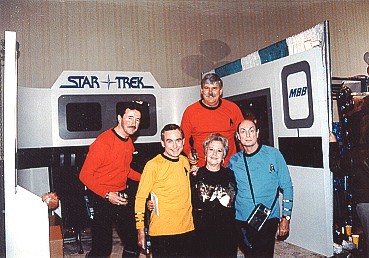
We built our first and only mock Bridge set and helped outfit them with costumes and props. It was a hit. Look pretty good, don't they?
A film called "Nightmare at Noon" for Ron Greenwood, (no pictures found yet) a Lecture at UCLA for Ron Greenwood's class on film prop mastering,
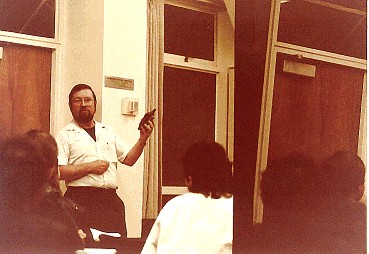
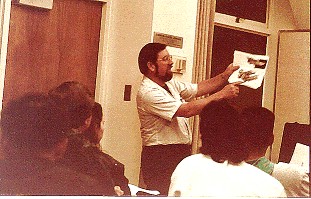
I put together another complete package of a product proposal and how I would make them and sell them and gave it to the Merchandising Dept, asking for a return call to talk about obtaining a License.
And then a call came from Paramount Merchandising, requesting an interview.
At last, it was going to happen. But wait, it was not The Licensing Dept, it was a division doing sales by Paramount themselves, and the Catalog was called "The Paramount Special Effects Catalog."
They were very interested in carrying my Classic Phaser, and I left samples of all my current Classic Models.
A week later I got the call, they wanted to start with the Classic Phaser and add the other props as sales provided. I started shopping production systems, mass production to handle the expected sales.
A second meeting was set up a few weeks later where I was to receive the order: I was running late that day and broke almost every speed and traffic law getting to that so important meeting, and I made it on time, but the person I was to meet with was now 45 minutes late, but at last I was called in to the interview.
And during the interview, the unthinkable happened: the catalog that was going to carry my product was canceled. The people who were going to "hire" me were let go. They were all fired!! AND SO WAS I!! Heck I never even got hired!
And once again, after thinking I was going somewhere, I was on a road to nowhere.
Well, I pulled out all the stops, I asked, begged and traded for information, god, did I feel like the old TV show hero "The Prisoner" "We want Information, INFORMATION!" "You will not get it!"
I grilled Richard Arnold, I pestered those whom had got a deal. One even gave me a look at a copy of his contract.
I gathered all the help and power I could. We prepared. I wrote up every conceivable document they could ask for, the proposal, sales plan, production systems, sales projection, and advertising plan, each in a few different ways and figures to suit whatever we might run into.
I even bought a new suit and tie (worn only once for THAT INTERVIEW!).
I called again and asked for a meeting. I got a Mr. Michael Tabakin. A good and smart old friend was playing business associate, we had four to five names on our letter head to look big enough to pay them to sell Star Trek stuff.
All dressed up in suits we went in.
First thing Mike did was showing us a C&D letter to StarLand a company out of Denver along with one of StarLandâs flyer with props.
We said, so what? That isn't us, and we were here to get a license.
He said okay, so what do you have? So we did the horse and pony show, pulled display bases and put out a Classic Phaser, a classic Communicator, a classic Tricorder, a classic Phaser one, then, on an another display base, an ST3 Phaser, an ST3 Communicator, and an ST3 Tricorder. Then, on a third base, we put a ST3 Klingon Disrupter, Communicator and Tricorder.
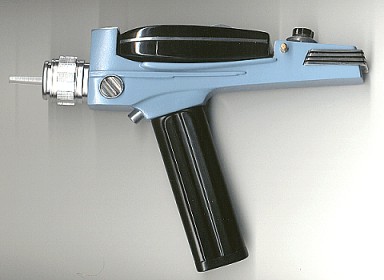
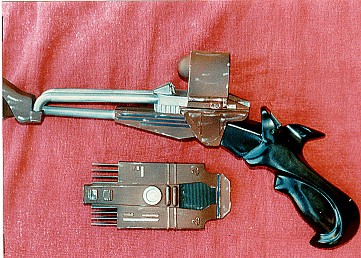
I pitched a reproduction of the "Star Trek" Enterprise Commission Plaque, and suggested that we would do one from every version of the Enterprise. (We were first)
As part of the pitch we also pulled out a Nautilus model and pointed out that my company had been making these for the Disney Company for over five years.
I also laid out my resumé of film and TV work.
Throughout all of this, he seemed politely bored.
Then I pulled out the Trek-A-Head Sun Visors. NOW that was something he could understand. A cheap novelty hat. He got real interested in it.
Could we manufacture it fast, large and cheap enough?
No, we said. "Then can I pitch it around for you, to manufacturing companies that might be interested," he asked, which we said, sure. At this point he was a lot more willing to go forward on everything. He said he would be getting in touch with us. And for once I was dealing with licensing department of Paramount
Mike called and first he said the best deal he could get was for $10,000 for a two year domestic contract, sorry best he could do. I read the "sorry" as he felt we could not handle that. I said no problem, let's go. He said then, great, bring in the Classic samples, and he would get working on it.
I dropped off the samples.
I then called Mr. Mike Okuda and asked if he had seen them yet, and he said yes and that he and Greg Jein were writing papers on them.
I then invited Mike to lunch so we might talk about the models. I felt (correctly) that he had taken it easy on me and asked him about this at lunch. He said yes that he had, so I asked him to tell me what he had left out. He said that he would like to see something covering the 9Volt battery and both a wall and desk stand. I asked if he thought I would get away with putting the copyright on the plate under the Phaser one where it would be "out of sight", he said he would support this idea.
I thanked him and went to retool the props and redo the Plaques, etc.
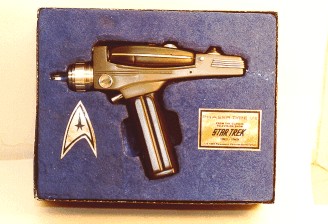
We worked night and day and spent a ton of money and time trying to get all redone as per the requests.
Like a display box.
Then began the questions and requests, who was our distributor going to be? How were we going to ship? Could we include a display box for retail sales? The distributor question came up several times.
We exchanged the samples for the new ones with the display packaging and the Plexiglas display stand and waited. And we waited.
I called Mike Okuda, asking, "Have you seen the new models?" I told him that I had done all he had officially asked for and the unofficial suggestions too, but he said he had not seen the models yet, and this was already three weeks, and the first time he had them in days, what was wrong?
Another month went by. In December I got a call from Mr. Tabakin. Sorry there was no deal, he had tried but it was not going to happen, and that he was fed up also and leaving Paramount, and good luck in the future and good-bye.
A few months later Playmates came out with their line of Star Trek toys.
I packed and pulled out of Los Angeles for Phoenix, to rest and rebuild and to become the best damn prop maker making unlicensed props within fandom.
When I heard there had been a change in vice-presidents of licensing I sent in another pitch with pictures and proposal again, only to receive the final reject letter and a request to fill out a form asking all kind of questions like who was my vice-president in charge of production, who was vice-president in advertising, who was the CEO, who were the board members and so on.
A couple a years passed. There were rumors of some people getting C&D letters, and I called each and everyone I heard of. All were paper tigers, if you stood up to them you only had to give up one or two things, one had to stop using local access TV ads, another changed from Klingon this to something without the name Klingon, stop using the word Phaser and call it a 23rd Century Weapon, stop carrying the Star Fleet patch and a hat.
Everyone was slapped on the hand and let go, so when I got a C&D I too hired a lawyer and stood up to them. We kept trying to work a deal, we ask again and again to get a license.
The lawyers exchanged letters back and forth a few times no stop doing doing anything, no name change nothing and then Paramountâs lawyers faded away.
No one bothered me, no letters, no calls nothing.
Then something like two years later they sued. Viacom/Paramount sued me for copyright infringement for a few MILLIONS!
More in "This is your life: Richard A. Coyle, Part Two", coming to a web page near you.
PS this is a work in process so there may be changes from time to time as I find pictures and get films to capture frames from and remember other things I did in the good old days.
Thanks for reading, and feel free to write.
Rich